
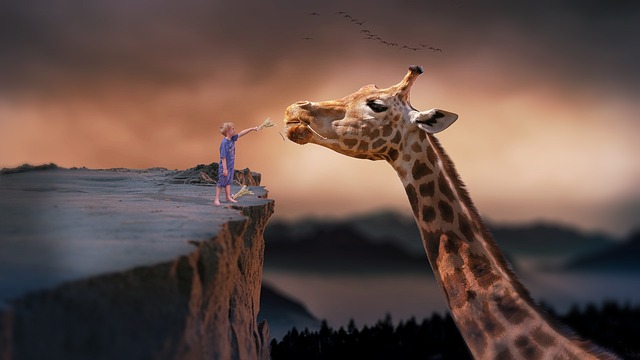

Imagination has always been a powerful force in shaping human experience, functioning as the bridge between our innate curiosities and the vast realms of knowledge in science and modern philosophy. It is through imagination that we can visualize possibilities beyond our current understanding, enabling us to challenge the boundaries of both scientific discovery and philosophical thought.
In the world of science, imagination serves as the catalyst for groundbreaking theories and inventions. Think of the ancient astronomers who imagined celestial bodies moving in a vast, ordered universe long before they had the telescopes to confirm their suspicions. Their imaginative leaps laid the groundwork for our current understanding of gravitational forces and cosmic dynamics. Science, stripped of imagination, becomes a mere collection of facts devoid of wonder and exploration. It is our imagination that dares to ask “What if?” and inspires scientists to pursue their inquiries with passion and creativity.
Similarly, in the realm of modern philosophy, imagination plays a critical role in unraveling the complexities of existence and consciousness. Philosophers like Jean-Paul Sartre emphasized the significance of imagination in understanding our existential freedom. For Sartre, our capacity to envision alternate realities and possibilities is fundamentally linked to our ability to navigate life’s dilemmas, making choices that define who we are. The act of imagining different scenarios not only enriches our theoretical discussions but also impacts our lived experiences. Through imagination, we can step outside the confines of our everyday lives, contemplating new ethical frameworks or alternative social conditions.
The interplay between imagination and philosophy is particularly pronounced when we examine our place in the universe. As modern thinkers grapple with existential questions, it becomes evident that the exercise of imagination is essential for exploring the vast uncertainties of human existence. Questions about identity, purpose, and morality lead us to rely on our imaginative faculties, as we engage in speculative reasoning that stretches the limits of logic and experience.
The existentialist perspective reinforces the notion that we are not merely passive observers of life. Instead, we are active participants in an ongoing narrative, shaping our realities through the choices we make. The imagination becomes a powerful tool for not only envisioning who we might become but also for understanding the emotional landscapes we navigate. By imagining ourselves in diverse situations, we cultivate empathy and attain a deeper comprehension of the shared human condition.
Through the lens of existentialism, one can recognize that imagination bridges the gap between philosophical inquiry and scientific exploration. As we grapple with questions of existence, it is our imaginative capacity that allows us to dream beyond the empirical, fostering narratives and understandings that resonate deeply within us. The intersection of science and modern philosophy, therefore, is more than a mere connection; it is a vivid tapestry woven from the threads of imagination, curiosity, and existential exploration.
As we continue to traverse this intricate web of thought, let us harness the power of imagination to inspire innovation, provoke ethical considerations, and ultimately, understand our complex relationship with the world around us. In doing so, we embrace both the scientific and philosophical dimensions of our existence, recognizing that our ability to imagine profoundly shapes our reality.