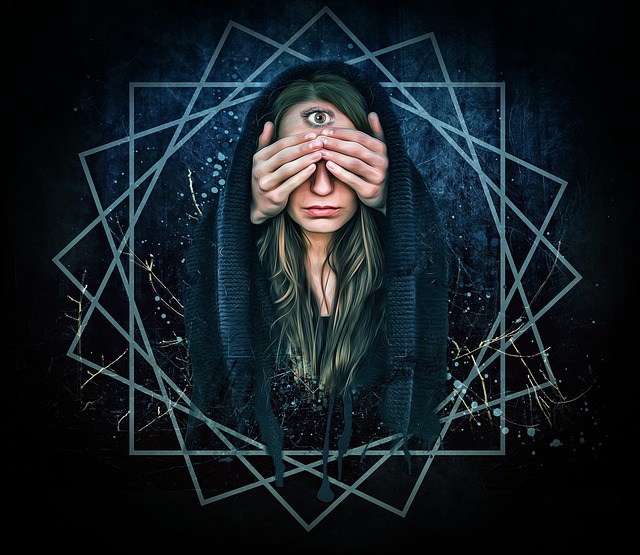


In the quiet moments between waking and working, many of us feel a subtle, persistent question tugging at us: Who am I, really, beneath all these roles, opinions, and expectations? This question lies at the heart of self-examination, and in the Szkepszis spirit—where doubt is not a weakness but a method—it becomes a shared field of exploration. Here, self-examination is not a lonely, abstract ritual; it is a living dialogue between science, modern philosophy, and the everyday uncertainties that we carry.
Self-examination often begins where certainty ends. You may trust data, logic, and evidence, yet still sense an inner restlessness that numbers cannot quiet. Szkepszis invites you to hold that restlessness gently and investigate it, not by choosing between science and philosophy, but by letting them question each other inside you. What if the most honest laboratory you have access to is your own mind—its biases, its hopes, its fears?
From a scientific point of view, you are a complex system of neurons, hormones, and electrochemical signals. Cognitive science tells us that your thoughts emerge from immense networks of brain cells, each firing or falling silent in patterns that can be measured, mapped, and sometimes predicted. Psychology adds layers of conditioning and environment, reminding us that your worldview is shaped by childhood, culture, trauma, and chance. Yet, when you close your eyes and look inward, you do not experience yourself as a statistical aggregate or a set of neural pathways. You feel like a single, continuous “I.”
This tension—between measurable brain and lived self—is where modern philosophy joins the conversation. Phenomenology, for example, asks you to turn toward your experience as it is given: the weight of a memory, the color of a mood, the faint anxiety before a difficult decision. Instead of dismissing these as “merely subjective,” it treats them as the primary data of consciousness. Szkepszis, standing at this crossroads, suggests you neither worship scientific objectivity nor romanticize pure introspection. You let them interrogate each other.
In practice, self-examination in the Szkepszis sense can feel like running a personal experiment. Imagine you notice that you react with anger when criticized. A purely philosophical stance might ask, “Is this anger justified?” A purely scientific stance might ask, “What past experiences and neural responses produce this pattern?” Szkepszis encourages both questions at once: you examine your memories and triggers while also challenging the beliefs that define your sense of dignity, worth, and vulnerability. You hold your emotional data like a researcher, but you also question your own frameworks like a philosopher.
Modern philosophy of mind reminds us that our inner narrative is not neutral. Thinkers who explore consciousness, identity, and language suggest that our sense of “self” is a shifting construction, continuously edited. You tell yourself stories—about who you are, what you deserve, what the world is like—and then you live as though those stories were undeniable facts. Self-examination—in the Szkepszis way—means daring to doubt these stories without discarding yourself. Instead of asking, “Is my story correct?” you begin to ask, “What does this story do to me? What does it make me capable or incapable of?”
Science deepens this perspective by confronting you with cognitive biases. Confirmation bias, for example, makes you notice information that supports your existing beliefs and ignore what challenges them. The Dunning–Kruger effect shows you can be most confident where you know the least. These findings are not merely curiosities; they are mirrors. When you read about them and then look inward, you may recognize how often you cling to opinions because they feel safe, not because they are well-tested. Szkepszis turns this realization into a practice: every opinion becomes a hypothesis, every certainty a temporary model rather than a final truth.
This scientific humility echoes modern philosophical skepticism, but with a twist. Szkepszis is not sterile doubt; it’s humane doubt. It acknowledges that behind every belief there is a person trying to cope with fear, loneliness, or chaos. Self-examination in this space becomes an act of compassion: you question yourself not to prove yourself wrong, but to better understand why you hold on so tightly to what you do. You ask, “What would change in my life if I allowed this belief to be uncertain?” The answer can be unsettling, but also liberating.
Neuroscience adds another layer, showing that self-examination can literally reshape your brain. Practices like mindfulness, which combine attention and open curiosity, alter neural pathways associated with emotional regulation and self-awareness. From a Szkepszis perspective, this is powerful: your inner doubts and reflections are not just philosophical games; they leave physical traces. When you repeatedly observe your own anger, fear, or joy without immediate judgment, you are training your brain to hold complexity. You are becoming the kind of person who can remain curious even when threatened by uncertainty.
Yet there is a risk: self-examination can slide into self-attack. You might start to treat every emotion as a flaw to be diagnosed, every inconsistency as a failure. Science, with its focus on explanation, and philosophy, with its love of critique, can both feed this harshness. Szkepszis pushes back by insisting on a different posture: you are not a broken machine to be repaired; you are a living process to be understood. Doubt becomes a tool, not a weapon. Instead of asking, “What is wrong with me?” you ask, “What is my mind trying to protect me from?” This shift keeps self-examination from collapsing into self-rejection.
Modern ethics also enters the scene. When you honestly examine yourself, you confront your impact on others. Science can reveal the subtle ways power, privilege, and social conditioning shape your choices. Philosophy then asks whether those choices align with the values you claim to hold. If you believe in equality, how do your daily habits reflect that? If you value honesty, where do you still hide behind silence? In Szkepszis, self-examination is not purely internal; it radiates outward, challenging the comfort of saying, “That’s just how I am.” Instead, identity becomes an ongoing project, tested in the lab of relationships.
At times, this project can feel exhausting. You may long for the certainty of clear rules, a final theory of yourself that settles everything. But both science and modern philosophy whisper the same uncomfortable truth: reality is dynamic, and so are you. The brain keeps rewiring, societies keep shifting, and the questions that haunt you at twenty are not the same as those at forty or sixty. Szkepszis does not promise an end to this movement. It offers, instead, a way of traveling: eyes open, instruments on, ready to update your maps as new evidence—outer or inner—appears.
There is something deeply human about sitting at this intersection of data and doubt, of brain scans and late-night anxieties. When you practice self-examination with the tools of science and the insights of modern philosophy, you are joining a long lineage of people who refused to take themselves at face value. You are saying, “I am more than my impulses, yet I am also not separate from them. I am both subject and object, observer and observed.” This dual role can feel strange, even disorienting, but it is also a source of quiet strength.
Within the Szkepszis category, self-examination is not framed as a temporary crisis or a luxury for the privileged. It is treated as a lifelong craft, a way of staying honest in a world that constantly tempts you with ready-made identities and prefabricated answers. Science hands you the tools to detect your blind spots; modern philosophy hands you the questions that keep your curiosity alive. What you do with them becomes your personal experiment—messy, unfinished, and profoundly your own.