
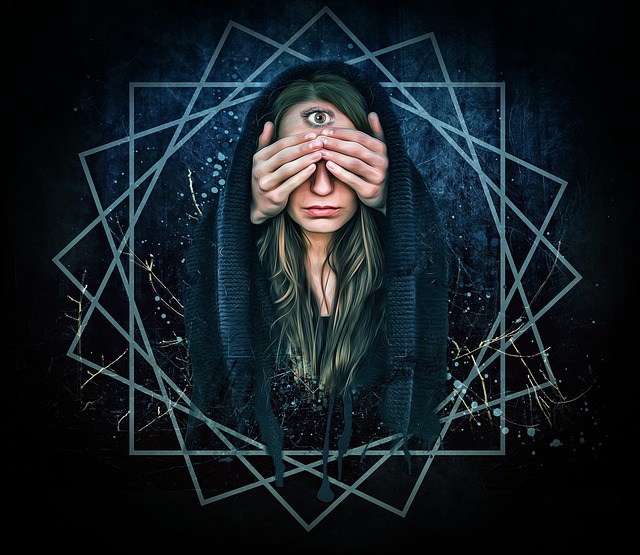

In the world of Szkepszis—that restless, questioning stance toward everything that seems too neatly packaged—our intuitions are both our closest friends and our most suspicious companions. We lean on them when science feels distant and abstract, and we doubt them when philosophy reminds us that “it feels true” is not the same as “it is true.” This tension, this subtle disquiet, is exactly where the intersection of science and modern philosophy becomes so humanly interesting.
Think about how you navigate everyday life. Long before you know any data, you have gut feelings about people, about risks, about what is fair or unfair. These intuitions feel immediate, almost self-evident. You just know someone is trustworthy, or that a certain decision is wrong, even if you cannot fully explain why. At the same time, somewhere in the back of your mind—if you belong in the Szkepszis category—you hear a quiet voice whispering: “What if I’m fooling myself?”
Science, at its core, was built exactly to keep that whisper alive. Scientific method is institutionalized skepticism: measure, test, replicate, doubt, refine. It doesn’t start from “I feel” but from “Let’s see.” When experiments show that our eyes mislead us or our memories distort, science is not attacking our humanity; it is mapping the limits of our intuitions, tracing their blind spots like a careful cartographer of the mind.
Modern neuroscience and cognitive psychology have gone even further. They show that many of our seemingly solid intuitions—about cause and effect, about how rational we are, about how independent our choices feel—are full of systematic biases. We overestimate what confirms our beliefs, ignore what challenges them, and edit our memories to protect a stable sense of self. From a skeptical vantage point, this does not mean we must abandon our intuitions; it means we must treat them as data, not as verdicts.
Modern philosophy has had its own complicated relationship with intuitions. For a long time, especially in analytic philosophy, intuitions were treated as reliable starting points: “What do we intuitively think about personal identity, free will, morality?” Philosophers built intricate arguments from what “seems right” in thought experiments. But as empirical work on cognition advanced, the picture darkened. If our intuitions vary across cultures, languages, and even the order in which questions are asked, can they really serve as rock-solid foundations?
This is where the Szkepszis mindset becomes invaluable. It allows you to both inhabit your intuitions and investigate them. Instead of either blindly trusting them or cynically dismissing them, you can ask: Why do I have this intuition? Where did it come from? What does science say about this type of judgment? For example, your intuition about personal responsibility may resist the idea that brain states determine behavior. Yet neuroscience shows clear causal patterns between brain damage and changes in personality. Philosophy steps in not to dismiss your feeling, but to clarify it: perhaps what you care about is not metaphysical freedom, but whether someone can respond to reasons, or change over time.
At this intersection, modern philosophy often borrows directly from scientific insights. Experimental philosophy, for instance, uses surveys and behavioral data to test philosophical assumptions about what people intuitively think. Do we really all share the same basic notions of fairness or knowledge? The data say no. Intuitions differ. For someone attracted to Szkepszis, this is oddly comforting: it confirms that questioning is not a failure but a necessity. If intuitions conflict, skepticism is the responsible stance.
Yet, we cannot live by skepticism alone. You still have to decide whom to trust, what to value, which risks to take. Here, intuitions return, not as unquestionable authorities, but as starting points in a dialogue with evidence and argument. Science can tell you the likely outcomes of a medical treatment; your intuitions about quality of life still matter. Science can estimate climate risks; your moral intuitions shape what sacrifices seem acceptable. Modern philosophy analyzes these moral and existential choices, asking you to reflect on what kind of person you want to be and why you privilege some intuitions over others.
In this way, intuitions are like hypotheses about yourself and the world. They are emotionally charged sketches of reality that feel true because they are entwined with your history, your culture, your fears, and your hopes. The skeptical attitude of Szkepszis does not command you to erase them; it invites you to treat them with a respectful distance. You can say, “I feel this very strongly—and I will still ask if it is justified.”
Consider how this plays out in questions about meaning. Your intuition may whisper that life needs a grand purpose to be worthwhile, something objective and cosmic. Modern philosophy, drawing on existentialist and pragmatic currents, pushes back: perhaps meaning is not found but made. Science will not deliver a cosmic script, but it can tell you what tends to foster well-being, connection, and mental health. The skeptical stance here is not nihilistic; it is honest. It lets you admit that your longing for ultimate meaning is powerful, while also recognizing that reality may not conform to that longing.
There is a quiet courage in this position. To live with Szkepszis is to accept that certainty is rare, that even your most intimate intuitions are open to revision. Science’s evolving discoveries and modern philosophy’s relentless questions become partners in a long conversation with yourself. You learn to notice the first rush of intuition—about what is true, what is right, what is possible—and then pause. You ask: “What would the evidence look like if I were wrong? How do others, with different experiences, feel about this same question?”
In that pause, something subtle shifts. Intuitions stop being invisible rulers of your thought and become visible participants. You can name them, challenge them, and—when they survive scrutiny—endorse them more consciously. The intersection of science and modern philosophy thus becomes less a battlefield and more a workshop, where your intuitions are continuously tested, reshaped, and sometimes reaffirmed in a deeper, more reflective way.
If you find yourself often caught between what you feel is true and what you can justify, you are already living in this intersection. Szkepszis is not a cold detachment from life; it is a way of honoring both your intuitions and your responsibility to examine them. Science provides the tools to uncover patterns beneath appearances. Modern philosophy offers the language and frameworks to interpret those discoveries and fold them back into a thoughtful, examined life. And you, standing in the middle, hold the difficult task—and the rare freedom—of choosing which intuitions to keep, and how to let them evolve.