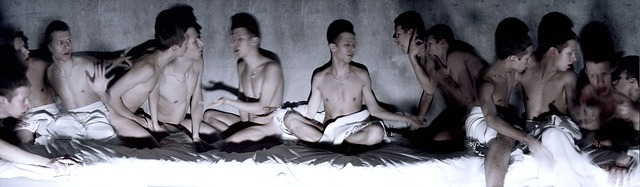


In the realm of modern Analitika, the art of portraiture transcends mere representation, delving deep into the intersections of science and philosophy. The portrait, often perceived as a simple depiction of the human face, serves as a powerful medium for exploring identities, emotions, and societal nuances. This exploration invites us to consider how modern scientific advancements and philosophical discussions shape our understanding of self and the other.
From a scientific perspective, the study of facial features and expressions offers insights into human behavior and psychology. Neuroscience has revealed that facial recognition is not just a cognitive exercise but also an emotional one. Our brains are wired to interpret subtle cues—an upward curve of the lips or the slight lean of a head—that convey complex emotional states. When we look at a portrait, we engage in a dialogue with the subject, often reflecting on our own feelings and experiences. This interaction can evoke empathy or contemplation, highlighting the potency of visual art in expressing the human condition.
Moreover, modern philosophy challenges us to ponder the essence of identity and existence as reflected in portraiture. Philosophers such as Emmanuel Levinas and Paul Ricoeur have emphasized the relational aspect of identity, where one’s self is not an isolated entity but deeply interconnected with others. In this context, a portrait becomes a site of relational ethics, a visual formula capturing the essence of another’s being while simultaneously inviting the viewer to reflect on their identity. The portrait thus transforms into a mirror, reflecting not just the exterior but also emanating the complexities of human existence.
The interplay between science and philosophy within the practice of portraiture encourages us to reflect on how we perceive ourselves and others in an increasingly complex world. Technological advancements in photography and digital art facilitate the creation of strikingly realistic portraits, while also challenging our traditional notions of authenticity and representation. What does it mean to capture a person’s likeness in pixels and bytes, and how does that impact our understanding of the individual? These questions illuminate the philosophical debates surrounding simulacra and reality, driving us to consider the implications of our digital age on self-identity.
Yet, even amid technological advancements, the emotional resonance of a hand-painted portrait remains unmatched. The deliberate brushstrokes, the choice of colors, and the nuances in light and shadow all carry the artist’s intent and emotional engagement. A portrait painted with intention invites the viewer into a deeper conversation about the subject’s life, emotions, and dreams. This depth of connection activates a philosophical inquiry into the creative process itself—what drives the artist to capture a moment, an emotion, or an essence? This line of thought connects back to the venerable ideas of aesthetic experience and the value of human creativity.
As we immerse ourselves in the world of portraiture within the modern Analitika framework, we find ourselves standing at the crossroads of science and philosophy. Each portrait tells a story, not just of the subject but also of the societal context, the artist’s perspective, and the viewer’s interpretation. This multidimensional character of portraiture serves as a powerful tool, enabling us to explore and understand the intricate layers of human existence, sparking both analytical thought and emotional engagement.