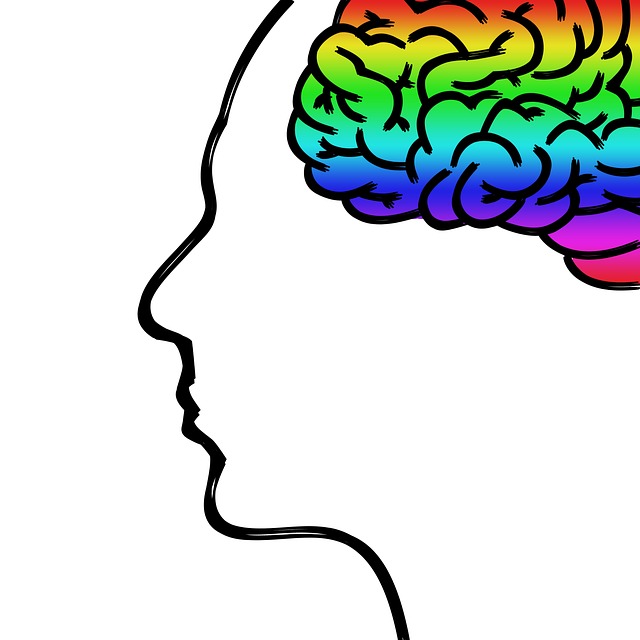


Interpretation lies at the heart of phenomenology, serving as the bridge that connects the lived, subjective experience of the individual with the objective frameworks developed by science and the reflective insights of modern philosophy. In this exploration, the term “interpretation” is not simply an act of translation; it becomes a methodological tool that enables the synthesis of diverse epistemic traditions. By examining the ways in which phenomenological interpretation interacts with scientific inquiry and philosophical thought, we gain a richer understanding of the limits and potentials of human knowledge.
Phenomenology and the Primacy of Meaning
The phenomenological tradition, inaugurated by Edmund Husserl, emphasizes the importance of phenomena as they appear to consciousness. Husserl’s epoché, the suspension of judgment regarding the existence of the external world, places the focus squarely on the structures of experience. In this context, interpretation becomes the process by which one uncovers the intentional acts that give meaning to phenomena. Every act of observation, every perception, is already laden with preconceptions that shape the way the world is construed. Interpretation, therefore, is the task of making explicit these preconceptions and bringing them into conscious critique.
In phenomenology, meaning is not a static attribute but a dynamic interplay between the object and the subject. The intentionality of consciousness—its directedness toward an object—provides the field in which interpretation takes place. The act of interpreting a phenomenon is itself an intentional act, a movement toward a fuller understanding of the structure of experience. This meta-level reflection is what distinguishes phenomenological interpretation from more conventional analytical methods.
Science’s Quest for Objectivity
Science, in contrast, seeks to establish objective laws that predict and explain phenomena independently of any particular consciousness. Experimental methods, mathematical models, and statistical analysis are tools that help to control for subjective bias. Yet the very fact that scientific theories are developed, tested, and refined by human minds inevitably introduces an interpretive layer. Even the choice of variables, the framing of hypotheses, and the interpretation of data are influenced by theoretical commitments and cultural context.
Bridging science and phenomenology therefore involves acknowledging the interpretive practices embedded within scientific work. When phenomenologists engage with scientific theories, they do not merely accept the empirical findings at face value; they interrogate the conceptual frameworks that underlie these findings. This interpretive critique can reveal hidden assumptions about the nature of reality, the role of the observer, and the limits of measurement. Conversely, scientific insights can inform phenomenological interpretation by providing concrete examples of how phenomena behave under controlled conditions, thereby sharpening the phenomenologist’s sensitivity to the structure of experience.
Modern Philosophy’s Engagement with Interpretation
Modern philosophers, particularly those influenced by existentialism, post-structuralism, and the analytic tradition, have expanded the scope of interpretation beyond phenomenology. Thinkers such as Jean-Paul Sartre, Michel Foucault, and Paul Feyerabend have argued that knowledge is always mediated by frameworks of meaning. In this view, interpretation is not a passive receipt of data but an active construction that shapes the very questions we ask.
Foucault’s genealogical method, for example, demonstrates how discursive formations regulate the production of truth. This genealogical perspective is essentially interpretive: it traces the historical emergence of concepts and interrogates their power dynamics. Similarly, Paul Feyerabend’s epistemological anarchism stresses that no single methodological approach can claim universal supremacy. Instead, diverse interpretive lenses should be applied to scientific and philosophical problems, recognizing that each lens offers a different access to truth.
Case Study: The Interpretation of Quantum Mechanics
Quantum mechanics provides a vivid illustration of the interplay between scientific interpretation and phenomenological analysis. The standard Copenhagen interpretation emphasizes the role of measurement and observer, implying that phenomena do not possess definite properties until observed. This raises profound questions about the nature of reality and the limits of human knowledge.
Phenomenologists, in engaging with quantum mechanics, examine how the concept of measurement aligns with the lived experience of observation. The act of observing a quantum system can be likened to the intentionality of consciousness: both involve a directed attention that brings a particular aspect of the world into focus. By interpreting the quantum formalism through the lens of intentionality, one can explore whether the indeterminacy observed in quantum experiments reflects a deeper phenomenological structure of experience itself.
“The quantum world reminds us that our grasp of reality is mediated by a network of interpretations—both scientific and phenomenological—each shaping our perception of what exists.”
Methodological Implications of Interpretation
When interpretation is foregrounded, research methodologies must evolve to accommodate both the subjective depth of phenomenology and the rigor of science. Mixed methods research, for instance, can integrate quantitative data with qualitative insights derived from interpretive phenomenological analysis. This dual approach ensures that findings are grounded in empirical evidence while also capturing the richness of human experience.
Ethical considerations also come into play. Interpretive practices must respect the autonomy of participants and avoid imposing the researcher’s own biases. Reflexivity—continually examining one’s own interpretive stance—is essential to maintain integrity in the study of both scientific phenomena and philosophical concepts.
Tools for Enhancing Interpretive Practice
- Epoche Exercises – Training researchers to suspend assumptions and focus on phenomena as they appear.
- Interdisciplinary Workshops – Bringing together phenomenologists, scientists, and philosophers to exchange interpretive strategies.
- Reflective Journaling – Documenting the interpretive process to surface hidden preconceptions.
- Collaborative Analysis Sessions – Engaging multiple perspectives to triangulate interpretations and reduce individual bias.
Conclusion: A Continuing Dialogue
The dialogue between phenomenological interpretation, scientific inquiry, and modern philosophy is a dynamic and ongoing conversation. Interpretation serves as the fulcrum that keeps this conversation balanced, allowing each discipline to inform and challenge the others. As science pushes the boundaries of what can be known through empirical means, and as philosophy interrogates the underlying assumptions of these findings, phenomenology offers a critical, interpretive lens that remains grounded in human experience.
Ultimately, the practice of interpretation does more than translate between scientific and philosophical vocabularies; it invites a deeper exploration of how we, as conscious beings, construct and inhabit reality. By embracing interpretive rigor across disciplines, we enrich our collective understanding and remain open to the endless possibilities that emerge when science and philosophy meet in the realm of lived experience.