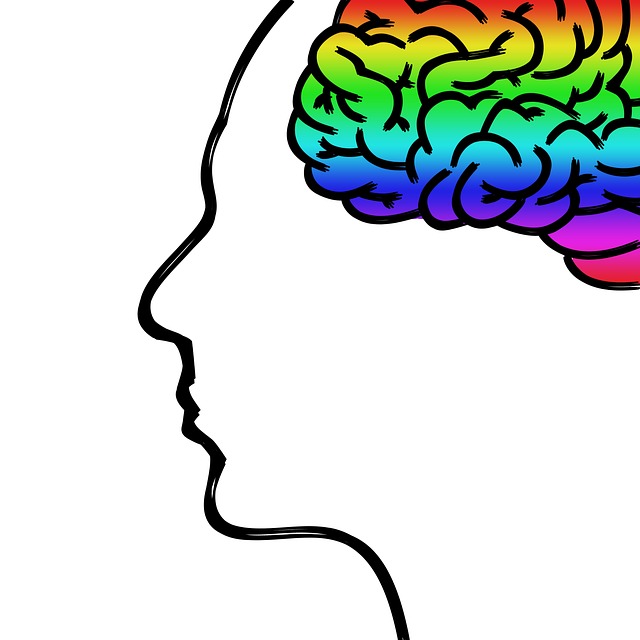


We live in an era where data charts the trajectory of rockets, DNA sequencing maps the ancestry of humans, and algorithms predict the spread of ideas with startling accuracy. In the middle of this whirlwind stands the question of fulfillment: an embodied, richly textured experience that refuses to be reduced to mere numbers. Phenomenology invites us to pause the rush of scientific abstraction and dwell in the immediate lived world, the place where heartbeats, thoughts, and sensations synchronize into a single horizon of meaning.
Science, at its best, illuminates the mechanics of existence. It reveals how neurons spark when we recall a childhood memory, how neurotransmitters flood the synapses when we recognize a loved one’s face, how the cosmos expands even as we read these words. Modern philosophy, on the other hand, wrestles with how these descriptive facts translate into prescriptive value—what it means to be a conscious agent who yearns for something more than physical survival. The phenomenological method bridges the two: instead of asking only how the brain produces the chemical signature of joy, it asks what is it like to dwell inside that joy, and how that texture orients us toward a life of grounded meaning.
The First-Person Laboratory
Think of the body as a laboratory no less precise than the Large Hadron Collider. When you wake up at dawn, cool air brushing your skin, your heartbeat begins to calibrate itself to the quiet hum of the world. The seemingly simple act of sipping coffee becomes an experiment in intentionality: aroma, warmth, anticipation, and satisfaction converge to create a micro-epoch of presence. Phenomenology tells us to bracket theories and simply attend to the way this moment resonates within us. In that resonance, fulfillment becomes less a distant goal and more a palpable vibration.
Objective Maps and Subjective Territories
Modern philosophy often contends that objectivity is the gold standard for truth, while phenomenology argues that truth is saturated with perspective. The biological description of a smile—muscle contractions, endorphin release—remains incomplete until it is paired with the subjective glow that radiates across the chest of the person smiling. By juxtaposing objective maps with subjective territories, we learn that the two are intertwined: scientific laws scaffold our existence, yet the felt sense of belonging gives those laws significance. Here, fulfillment reveals itself as the harmonious oscillation between the calculable and the ineffable.
The Ethical Pulse of Discovery
Both science and modern philosophy are driven by curiosity, but curiosity without ethical grounding can drift into manipulation. Phenomenology orients ethics inward: we interrogate how our actions reverberate through our lived experience. When researchers design AI to replicate human thought, a phenomenological inquiry asks whether these simulations respect the contours of consciousness or merely caricature them. Recognizing the difference is essential for collective fulfillment, for our inventions should amplify rather than eclipse the intimate richness of being alive.
Everyday Experiments in Meaning
An evening walk offers a simple thought experiment. Above, satellites trace silent arcs; beneath, our feet press against a sidewalk molded by civil engineers and historical zoning laws. Yet the immediate sensation of breeze through hair, the faint rustle of leaves, the presence of a friend walking beside us—these shape the narrative texture of the stroll. Science informs us of the material conditions; modern philosophy interrogates their implications; phenomenology fuses them in lived immediacy. Fulfillment arrives when we recognize that abstract knowledge and flesh-and-blood experience co-create the significance of each footstep.
Toward a Practice of Attunement
Consider adopting micro-rituals that tune awareness to this intersection. Keep a journal not just of activities but of the felt sense accompanying them: the density of silence during meditation, the electric pause before a breakthrough idea, the warm ebb after laughing with friends. Cross-reference these notes with scientific insights—perhaps correlating mood with circadian rhythm or cognitive performance with nutrition. Over time, patterns emerge, weaving empirical data into the phenomenological tapestry of life. This iterative dialogue nurtures a sustainable fulfillment that rises from both knowledge and presence.
In embracing science’s descriptive power and modern philosophy’s interpretive depth, phenomenology gifts us the missing intimacy. It tells us that data without lived resonance is flat, and experience without conceptual clarity can drift into chaos. The sweet spot lies in their intersection, where each breath testifies to the wonder of being a sentient node in a vast, ever-unfolding cosmos, and where fulfillment is experienced not as a final destination but as a continuous, dynamic alignment with the rhythm of existence.