
In the age of data, graphs, and algorithms, we like to believe that everything important can be measured. Yet each of us, quietly, knows a different experience: those moments when understanding flashes up before the proof, when we “just see” how something must be. This is where intellectual intuition steps onto the stage—a strange guest in a world obsessed with evidence, and a notion that inevitably awakens a healthy dose of skepticism, especially for anyone drawn to the Szkepszis mindset.
Skeptical readers often feel torn. On one side there is the rigor of science, the discipline of modern philosophy, the demand: “Show me the reason, show me the data.” On the other, there is a quieter voice that says: “I grasp it, even before I can articulate why.” It is not blind faith, and certainly not superstition. It is the sense that thinking itself sometimes leaps ahead of what we can explicitly justify. To live in this tension is to inhabit the real landscape of intellectual life today.
The Strange Status of Intellectual Intuition
When we hear the phrase intellectual intuition, many of us recoil. It sounds suspiciously like something that bypasses critical thought—a back door for irrationality. The skeptic in us objects: if we let “intuition” rule, do we not open the gates to prejudice, wishful thinking, and confirmation bias?
But intellectual intuition is not a license to believe anything. It is, rather, the felt moment when a pattern crystallizes, when a concept locks into place before we have laid out all the supporting steps. It is not a replacement for logical argument; it is the silent engine that fuels which arguments we pursue, which hypotheses we test, and which questions we even dare to ask. In this sense, skepticism and intuition are not enemies—they are partners in a tense, creative dialogue.
Science: Data Is Not the Whole Story
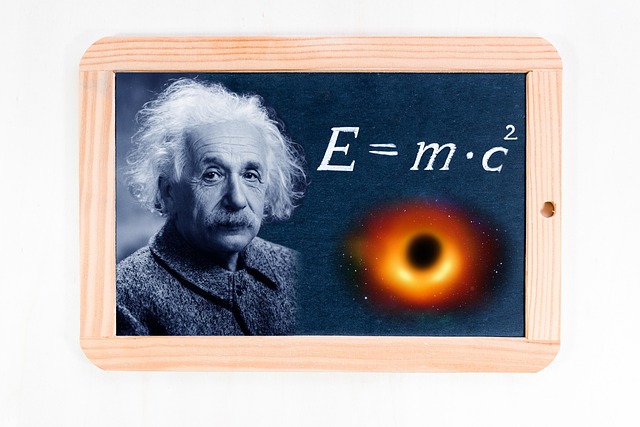
We tend to imagine science as a straight road from observation to law: gather data, build models, test predictions. Yet the history of science tells another story, one that anyone with a skeptical temperament can’t easily ignore: breakthroughs often begin as bold, almost unreasonable hunches. Einstein’s thought experiments were guided by an inner sense of “how things must be,” long before all the equations were settled. Faraday “saw” field lines in his mind’s eye before Maxwell encoded them mathematically.
These scientists did not reject evidence; they were simply not paralyzed by the absence of it at the beginning. Their intellectual intuition pointed toward an unseen order and invited experiment to either confirm or destroy it. The core of a genuinely scientific attitude is not “Trust intuition blindly,” but “Allow intuition to propose, and then let skepticism dispose.” The hypothesis is an intuitive act; the testing is a skeptical ritual.
Many of us who are drawn to a skeptical stance know this from our own experience with scientific or technical work. We see an anomaly in the data and we feel that something is wrong, even if we cannot yet name it. We have a sense that two apparently distinct phenomena are related, and only weeks or months later do we find the precise formulation. Intellectual intuition acts like a searchlight in a dark landscape—limited, fallible, but indispensable for deciding where to look.
Modern Philosophy: Between Reason and the Ineffable
Modern philosophy, too, wrestles with the status of intellectual intuition. On one hand, there is the proud legacy of rational analysis, carefully constructed arguments, and the demand for clarity. On the other, there is the uneasy recognition that some of our deepest certainties—about self, time, or consciousness—are not derived from argument, but are the starting points from which argument begins.
Consider how we “know” we have an inner life at all. No experiment or external measurement can give you direct access to your own immediate experience; it is simply there, undeniable, prior to any scientific description. Philosophers have called such self-givenness a kind of intellectual intuition: a direct, non-inferential awareness. For someone steeped in Szkepszis, this is both unsettling and strangely familiar. We usually trust what can be cross-checked; here we confront something known from the inside, where intersubjective confirmation is delicate, indirect, and incomplete.
Modern thinkers have split sharply on whether to embrace this. Analytic philosophers often try to domesticate intuition, treating it as a starting point for conceptual analysis that must be constantly re-examined. Phenomenologists, by contrast, invite us to dwell more deeply in these intuitive givens, to describe them rigorously but without pretending they are mere hypotheses. In both cases, the philosophical project lives in a fragile equilibrium: it needs intellectual intuition to reveal what is there, and it needs skepticism to prevent us from confusing first impressions with final truth.
Skepticism from Within, Not Against, Intuition
For readers who inhabit the Szkepszis category—not just as a label, but as a mode of life—there is a specific kind of unease when the word “intuition” appears. You may have spent years unlearning dogmas, mistrusting grand explanations, insisting on evidence and argument. You know how seductive it is to mistake a strong feeling for a correct conclusion. That experience is not something to discard; it is precisely what gives your skepticism its moral weight.
Yet there is a quieter layer of experience that even the most rigorous skeptic cannot eliminate: the way some ideas “ring true” before we can show why; the way certain arguments feel off, even when we lack a ready counterexample; the way a whole network of thoughts sometimes rearranges itself in a single, sudden insight. You can try to ignore these events, but they remain the unseen structure of your own thinking. Intellectual intuition is not the enemy of skepticism; it is the territory where skepticism must learn to operate more subtly.
To practice skepticism from within intuition means acknowledging: “I have this immediate sense that X is the case; now my work begins, not ends.” You neither worship the intuition nor suppress it. You treat it as a hypothesis generator, a clue, a suspicion—something that deserves attention but not automatic obedience. In this light, skepticism is not a wall against experience, but a method for negotiating with it.
The Emotional Texture of Intellectual Intuition
It is easy to speak about intuition in lofty terms and forget how it actually feels. Often it is not calm and mystical, but restless and slightly disorienting. You glimpse a possibility and suddenly your previous certainties wobble. The data you thought you understood begin to look different. The philosophical position that felt solid now appears incomplete.
For many scientifically minded skeptics, this can trigger an internal conflict. Part of you wants to demand, “Where is the proof?” Another part cannot ignore the new perspective that has cracked open in your mind. In these moments, intellectual intuition is experienced less as serene illumination and more as a productive disturbance. It unsettles you—not by replacing reason, but by forcing it to move.
This is where identification often arises. You may recognize yourself in the person who spends nights turning over a question, not because there is new data, but because something in their understanding no longer sits right. You remember decisions in your research, career, or personal philosophy that were not fully justified at the time, yet later revealed their deeper logic. It is tempting to rewrite those as purely rational in hindsight, but the memory of that initial, fragile insight still lingers.
Science and Philosophy as Disciplined Intuition
Seen from this angle, both science and modern philosophy can be understood as disciplined forms of intellectual intuition. The discipline lies in how we treat those intuitive flashes: we don’t cling to them dogmatically, nor do we discard them on principle. Instead, we test, refine, criticize, and sometimes abandon them. The first movement is intuitive; the long aftermath is critical.
In science, the discipline takes the form of prediction, reproducibility, and peer review. The initial hunch that “these two variables are linked” becomes a research program. Many such programs fail; the intuition that launched them was partial or misleading. But without that initial leap, no testing would happen at all.
In philosophy, the discipline takes the form of argument, counterexample, and conceptual clarification. The immediate sense that “freedom” or “identity” or “truth” means something specific is gradually unpacked, challenged, and sometimes dissolved. Philosophical progress often means discovering that a powerful intuition was mixed with confusion. Yet it was that very intuition that made the problem visible in the first place.
For those who live in the orbit of Szkepszis, this perspective offers a kind of quiet reassurance. You do not have to choose between being “intuitive” and being “rational.” You can admit the presence of intellectual intuition in your own thinking while insisting that every such intuition submit to the trials of criticism, dialogue, and evidence. The task is not to get rid of intuition, but to learn how to live honestly with it—aware of its power, wary of its limits, and open to the ways it can reshape both science and philosophy when guided, rather than ruled, by skepticism.