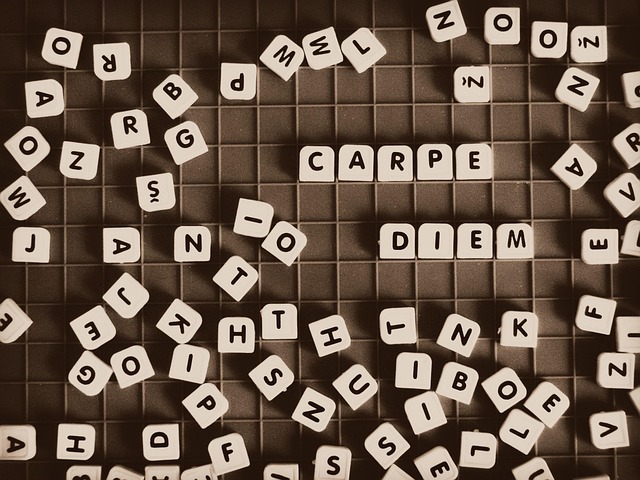


Standing alone in a quiet room late at night, laptop screen glowing, you might feel that familiar tug of questions: What am I doing with my life? Why does any of this matter? In the world of science, everything seems to have a formula, an equation, a model that gives structure to chaos. Yet inside, your experience can feel unstructured, scattered, almost painfully open. This is where the notion of structuring becomes more than a technical term; it becomes a lived tension at the intersection of science and modern philosophy, especially in the landscape of Egzisztencializmus.
Existentialism began as a rebellion against the idea that human beings can be fully explained the way we explain stars or atoms. Science seeks patterns, laws, predictable relationships. It structures data so that reality becomes legible and manageable. When you scroll through scientific news, you see this promise: with enough information, we can map the brain, predict behavior, maybe even engineer happiness. And yet, when you wake up at 3 a.m., the equation for your anxiety, your grief, or your longing for meaning is nowhere to be found. The numbers are silent where the heart is loud.
Modern philosophy, influenced by both science and existentialism, wrestles with this split. On one side, there is the scientific image of the world: neurons firing, chemicals flowing, algorithms calculating what you might like next. On the other side, there is what existential thinkers call lived experience: your loneliness in a crowd, your secret hope for a different future, the weight of freedom when you realize no one can choose for you. Structuring here is not just about organizing concepts; it is about how you assemble a life in the middle of competing stories about what you are.
In science, “structure” usually means stability: the structure of DNA, the structure of a galaxy, the structure of a theory. These structures help us predict outcomes and give us a sense of control. But in existentialism, structuring has a different flavor. Think of it as the quiet, often invisible work of arranging your days, your values, and your priorities in a world that offers no final blueprint. You choose what you will treat as important; you select which truths will shape your path. No external theory can fully do this for you. Even when you borrow a belief system—religion, politics, careerism—you still, in some silent way, decide to borrow it.
This is why the encounter between science and modern philosophy feels so personal. Science tells you: you are made of particles, obeying laws. Modern existential thought replies: yes, but you are also the one who must decide what to do with that knowledge. The tension is not just academic. It shows up when you read an article saying that love is “just chemicals,” yet your heartbreak does not feel like “just” anything. It shows up when a study claims happiness can be optimized through measurable habits, but your sense of purpose still slips through the metrics.
In this gap between measurable fact and lived intensity, structuring becomes an existential act. You take in the findings of science—neuroscience, psychology, physics—but you have to decide how they will fit into the story of your life. Do they reduce your experience or deepen it? Do they flatten everything into numbers, or do they expand your sense of wonder? That choice is not in the data; it is in you.
Modern philosophy often tries to build bridges here. It asks: if science reveals a universe without inherent purpose, how do we live without collapsing into despair or distraction? Existentialism suggests that meaning is not discovered like a planet; it is constructed, or better, enacted. You structure meaning through your commitments—through the relationships you protect, the work you show up for, the causes you slowly invest yourself in. You are not just a passive point in a cosmic diagram. You are a structuring presence, sketching patterns into your days, saying “this matters” when no law of physics requires it.
Yet this responsibility can feel heavy. Science, at its most reassuring, seems to offer ready-made structures: health guidelines, productivity methods, cognitive bias checklists. Follow the protocol and you will be okay. Existentialism whispers that even choosing to follow those guidelines is a free act that reveals who you are. You cannot hide entirely behind “the research.” You always bring yourself to it—your fears, your hopes, your hunger to be more than a case study.
Perhaps you know this feeling when you try to organize your life like a research project. You track your sleep, your steps, your mood. You carefully structure your habits, believing the right configuration will finally dissolve the underlying fog of uncertainty. For a time, it can help; structure can be comforting. But then something unexpected hits: a breakup, a loss, a sudden change. Your carefully crafted routines crack, and you are left facing the same open questions. At that moment, the existential dimension of structuring appears: you realize that no system can live for you. It can support you, but it cannot choose what your life is for.
In the tradition of Egzisztencializmus, this confrontation is not a failure; it is a threshold. You begin to see that meaning is not handed down by science, or by any external authority. It has to be woven from the inside out. You use the tools of science to understand your body and mind, to care for yourself better—but you still have to decide what “better” means. Is it productivity, peace, connection, creativity, justice? Science can measure many things, but it cannot finally tell you what is worth measuring.
Modern philosophy invites you to stop waiting for a final experiment to prove your life has value. Instead, it asks you to notice how you are already structuring meaning, even when you claim to be lost. The way you choose your friends, what you read late at night, what you avoid confronting, what makes you secretly proud—these are elements of a personal structure of significance. You may feel scattered, but even your confusion has a pattern, a shape. Existential reflection is the moment you turn toward that shape and admit: this is me, making something of my existence, whether I admit it or not.
At the intersection of science and modern philosophy, you do not have to choose sides. You can love the clarity of data and still honor the murky depths of your inner world. You can let scientific understanding inform your choices without surrendering the freedom to say, “Even so, I will live this way.” In fact, the most honest form of structuring may be to hold both together: a world of laws and a life of freedom, a body of chemistry and a heart that insists on meaning. In that tension, your existence stops being a problem to solve and becomes a path you are actively, bravely, structuring step by step.