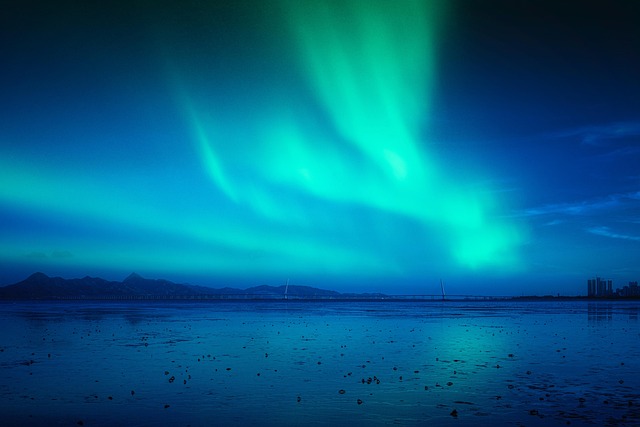


In the Analitika tradition, we do not simply ask what we know; we ask how we come to know, and what it feels like to stand at the edge of what can be known. The imagination of the limits of knowledge is not a dry, abstract exercise. It is a lived tension: the strange, almost physical sensation of pressing against a wall that might not even be there. Science and modern philosophy both grow out of this tension. They are, in different languages, attempts to describe what lies within our grasp, what always slips away, and why those two experiences matter so deeply to us.
Consider science first, not as a list of facts, but as a methodical discipline of doubt. Every experiment, every measurement, begins with a confession: “We do not yet know.” The scientist imagines a possible answer, a model of the world that might be true, and then exposes that imagination to the hardest reality they can construct: data, reproducible trials, peer criticism. What keeps this process alive is an almost stubborn sensitivity to the borders of understanding. When a measurement does not fit the theory, when an anomaly appears, that is where the imagination of the limits of knowledge starts to glow—like a thin line on a map that promises unexplored terrain.
In that sense, modern physics, biology, and cognitive science are vast cartographies of limits. We map how far our current methods can go. Quantum mechanics reveals that precision itself has a limit; the Heisenberg uncertainty principle tells us that certain pairs of properties cannot be known simultaneously with arbitrary accuracy. Neuroscience brings us to the fringes of consciousness, describing neural correlates while leaving the inner texture of experience unresolved. In every such case, science does not merely accumulate answers; it trains us to feel where answering stops and wondering begins.
Modern philosophy, especially in its analytic and post-analytic forms, has turned this sensitivity to limits into a core practice. When we reflect on language, logic, and experience, we are really tracing the grammar of our own boundaries. Think of Immanuel Kant’s critical project: a painstaking analysis of what must be true of our minds and concepts for scientific knowledge to be possible at all. For Kant, we are not simply inhabitants of a ready-made world; we are also the architects of the conditions under which that world becomes intelligible. His work is one of the most intricate exercises in the imagination of the limits of knowledge: not by fantasizing beyond them, but by showing how they shape everything we can say and think.
More recent philosophers inherit and transform this impulse. Analytic philosophy, with its careful attention to argument structure and meaning, tries to draw sharp lines around what can be coherently asserted. When we analyze the logic of scientific explanation, or the semantics of probability, we are also asking: Where does our conceptual scheme break down? Where do words like “cause,” “law,” or “objectivity” stop working as we expect? Even the famous debates about realism and anti-realism—about whether scientific theories describe an independent world or only organize experience—are fueled by a shared sense that our knowledge is both powerful and partial, luminous and shadowed at the edges.
Yet, there is a risk in treating limits as static walls. The feeling of many readers, students, and researchers in Analitika is more dynamic: as if knowledge is a moving frontier instead of a closed border. Here, imagination plays a double role. On the one hand, it warns us about overreach. We can imagine how theories might fail, how arguments might contain hidden assumptions, how methods might exclude what they claim to capture. On the other hand, imagination is also the force that allows us to redraw the limits themselves. Entire scientific revolutions begin when someone asks, “What if the boundary we take for granted is only a feature of our current model?”
Think about how the shift from Newtonian to Einsteinian physics did not just refine existing knowledge; it refigured the conceptual limits of space, time, and motion. Or consider how the analytic philosophy of language, once focused on rigid logical structures, has gradually opened towards context, pragmatics, and even embodiment. Each transformation begins with the courage to imagine that the old limits of knowledge—once treated as absolute—might actually mark the edge of only one possible framework. The frontier moves, and with it, our sense of what is knowable.
This motion is not purely intellectual. At a human level, the imagination of the limits of knowledge is a deeply personal experience. Anyone who has worked in a lab late at night, stayed up reading dense texts, or stared out the window after a difficult conversation about meaning and truth, knows the feeling. It is the quiet unease that arises when we realize that our best explanations remain incomplete, that our models leave something unsaid, that our own minds are both instruments of clarity and sources of distortion. In Analitika, we treat that unease not as a flaw, but as a resource. It keeps questioning alive.
In everyday life, this sensibility changes how we relate to certainty. Science shows us how knowledge can be robust without being final: theories are supported, not proven once and for all. Modern philosophy helps us recognize that even the way we pose questions is historically and conceptually shaped. Together, they suggest a posture of disciplined humility. To live with the imagination of the limits of knowledge is to accept that we always see from somewhere, that our perspectives are structured, that our tools—empirical and conceptual—come with built-in constraints. But it is also to recognize that these very constraints are what allow us to see anything at all.
There is also a subtle ethical dimension here. When we become aware of how our frameworks limit what we can recognize, we start to notice what (and who) falls outside them. A scientific paradigm might neglect certain phenomena; a philosophical system might ignore voices or experiences that do not fit its categories. Imagining the limits of knowledge can thus open a space for listening: to anomalies in data, to marginalized perspectives in society, to aspects of our own experience we habitually dismiss. Analitika, in this sense, is not an isolated intellectual practice; it is a way of cultivating a more responsive, responsible relationship to the unknown.
Science and modern philosophy, taken together, offer a kind of choreography for moving at the edge of understanding. Science steps forward with hypotheses and experiments, then steps back when results resist easy interpretation. Philosophy examines the steps themselves, asking about the logic and meaning of each movement. Imagination weaves between them, testing new possibilities, drawing new lines, erasing old ones. When you feel that familiar mixture of curiosity and frustration—the sensation that something important is just beyond the reach of your current concepts—you are already participating in this choreography.
To identify with the imagination of the limits of knowledge is to recognize yourself as a boundary-dweller. You stand between what feels solidly established and what remains obscure. You rely on scientific results while acknowledging their revisability. You use philosophical tools while recognizing that they, too, are historically situated and contestable. Instead of seeking refuge in either dogmatic certainty or cynical skepticism, you inhabit the in-between: a space where not-knowing is not a failure, but a starting point for better questions.
Within the Analitika category, this stance becomes a practice of clarity. We analyze not to flatten mystery, but to distinguish what we can responsibly claim from what we must still imagine. We test arguments, theories, and concepts to see how far they reach and where they falter. And we learn, gradually, to read the texture of our own limitations—how they shape our sense of the world, how they frustrate us, and how they invite us to keep thinking. Science and modern philosophy do not give us a final map of reality. They give us something subtler and, perhaps, more valuable: a refined sensitivity to the boundaries of our knowledge, and an imagination capable of tracing, questioning, and occasionally moving those boundaries.