
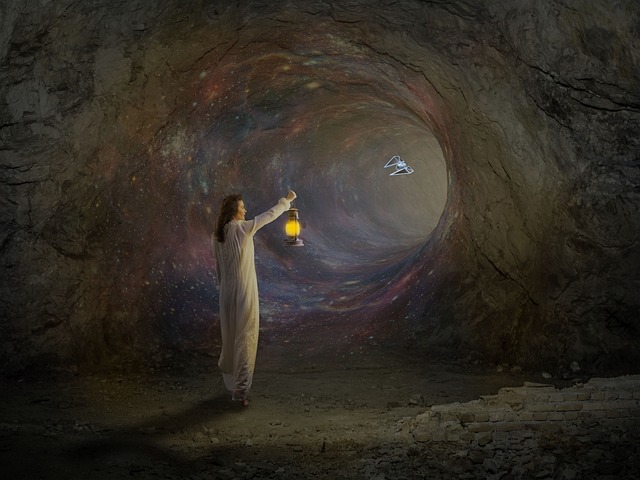

Perception is a fascinating aspect of human experience that encompasses not just the act of observing the world around us but also our interpretation of those observations. As we delve into the intersection of modern science and phenomenology, we uncover a rich tapestry that highlights the complexities of how we perceive reality. This exploration prompts us to question not just what we see, but how our perceptions shape our understanding of existence.
Modern science offers us tools to dissect the mechanisms behind perception. Neuroscience, for instance, sheds light on how our brain processes sensory information, revealing the intricate pathways that govern our experiences. But while science helps us understand “how” we perceive, phenomenology invites us to ponder “what” perception truly means from a subjective standpoint. This philosophical approach emphasizes the lived experience, urging us to consider the personal and contextual factors that influence our perceptions.
Philosophers like Edmund Husserl and Maurice Merleau-Ponty have taken significant strides in illustrating the phenomenological viewpoint. Husserl’s concept of “intentionality” posits that consciousness is always directed toward something, emphasizing our active role in perception. On the other hand, Merleau-Ponty’s work highlights the embodied nature of perception, suggesting that our physical presence in the world fundamentally shapes our experiences. These philosophical insights resonate deeply with modern empirical findings, forming a bridge between the subjective richness of human experience and the objective rigor of scientific inquiry.
This integration of science and philosophy raises profound questions: How do we navigate the gap between objective reality and our subjective interpretations? In a world overflowing with stimuli, our perceptions often pull us in different directions. The act of perception becomes more than just a sensory response; it is a complex interplay of cognitive processes influenced by our histories, emotions, and social contexts. By embracing both modern scientific perspectives and phenomenological insights, we can better comprehend the nuances of perception and its far-reaching implications on our daily lives.
Moreover, in an age dominated by digital media and rapid information exchange, understanding perception is crucial. Virtual realities and augmented experiences challenge traditional modes of perception, compelling us to confront how technology influences our view of the world. The tension between what is perceived and what is real invites an ongoing dialogue, fostering a generative space for inquiry. The more we understand the intricacies of perception, the more we can navigate these complexities with awareness and intention.
As we continue to explore the multifaceted dimensions of perception, we find ourselves standing at a crossroads of science and philosophy. This intersection empowers us to reflect on the nature of our experiences and consider the implications of our perceptions on broader social and cultural phenomena. In doing so, we embrace an enriched understanding of what it means to see, feel, and ultimately interpret our existence. This journey into the heart of perception invites us to engage in a shared human experience—one marked by both wonder and inquiry, urging us to seek clarity in the midst of life’s inherent complexity.