
In the midst of contemporary debates about science and truth, the necessity of relativity is not only a physical principle; it has become an existential mood. In the category of Szkepszis, skepticism is not mere doubt for its own sake, but a persistent, nagging question: what can we still trust when everything—from space and time to values and knowledge—seems to be relative? Many readers feel this tension inside themselves, even if they’ve never opened a physics textbook. We live in a world where certainties dissolve, and relativity becomes less a theory and more a mirror of our daily experience.
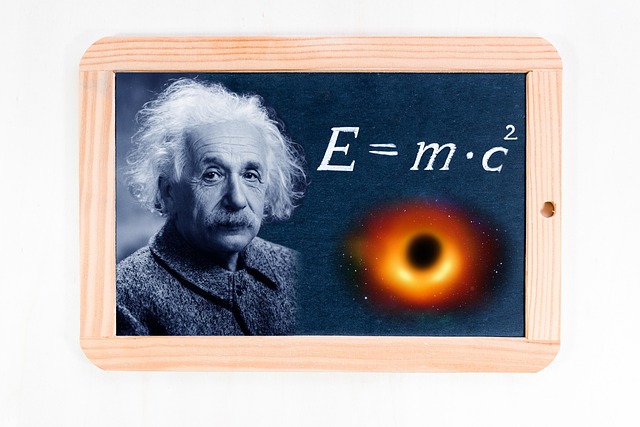
In the realm of Science, Einstein’s relativity shattered classical comfort. Time is not absolute; it stretches and shrinks depending on your motion. Space curves, light bends, simultaneity dissolves. The old picture of a stable, universal stage on which events unfold uniformly has vanished. What took its place is a universe in which measurements depend on where you stand and how you move. For many, this is thrilling. For others, it’s deeply unsettling. But for all of us, it echoes the contemporary sense that the ground under our feet is never fully solid.
This is where Modern philosophy enters. Long before relativity became a headline, philosophy wrestled with perspectives, contexts, and frameworks. Kant already argued that space and time are forms of human intuition, not independent objects. Nietzsche questioned universal truths and declared that there are only perspectives. Phenomenologists like Husserl and Merleau-Ponty put lived experience at the center, showing how the world appears differently depending on our standpoint. When Einstein announced his theories, they did not just transform physics; they resonated with these philosophical currents that had been quietly undermining the dream of an absolute, neutral view of reality.
Yet the necessity of relativity is often misunderstood. Relativity does not mean “anything goes.” It means that quantities such as time, length, and simultaneity are defined relative to frames of reference, and that once a frame is fixed, laws and predictions become precise and rigorous. Similarly, in modern philosophy, recognizing perspectives does not have to lead to chaos or nihilism. It can mean acknowledging that our viewpoint—historical, cultural, personal—shapes what we see, while still allowing for rational discussion and shared standards. This is a subtle balance, and many of us can feel both attracted and threatened by it.
In a skeptical age, belonging to the mental landscape of Szkepszis means living with this ambivalence. We are suspicious of grand, total explanations, yet we still long for something firm to hold onto. Relativity in science becomes a symbol of that inner conflict: it denies the comforting absolutes of classical physics, but it offers a new kind of reliability—laws that are valid precisely because they are expressed in terms of frames, not in denial of them. That paradox is familiar to anyone who is skeptical but not cynical, questioning but still searching.
Consider how this plays out in everyday life. We see public debates about climate change, artificial intelligence, or vaccines. One side invokes “the science” as if it were an unchanging oracle; the other side distrusts experts and institutions, claiming that all knowledge is relative, politically or economically tainted. The resulting polarization intensifies the feeling that nothing is stable. But the lesson from relativity is more nuanced: scientific knowledge is always situated—built from experiments, instruments, and theoretical frameworks—yet within those constraints it achieves remarkable objectivity. The laws do not depend on who we are, only on where and how we measure.
Modern philosophy of science amplifies this insight. Thinkers like Thomas Kuhn argued that scientific paradigms shape what scientists see and how they interpret data. Feyerabend pushed the polemic further, challenging the idea of a single, universal scientific method. For many who dwell in Szkepszis, these ideas feel both liberating and terrifying. If paradigms and methods can change, is there anything that survives the shift? Again, relativity offers a subtle guidance: you can change coordinates and still preserve the structure of physical laws. Transformations do not necessarily annihilate meaning; they can reveal deeper invariants.
This brings us to a crucial, often overlooked point: the necessity of relativity is not just about dependence; it is also about invariance. Einstein’s work seeks what stays the same when perspectives change. The speed of light is constant; the equations of physics keep their form in any inertial frame. In the same way, modern philosophy does not only highlight the relativity of viewpoints; it also searches for what remains robust under interpretive shifts—ethical commitments that survive cultural critique, logical structures that underpin different languages, criteria of coherence and evidence that allow conversation across ideological divides.
For readers who identify with skepticism, this dual movement—between relativity and invariance—can feel strangely familiar. On the one hand, you resist dogmatic certainties, institutions that claim final authority, or ideologies that speak in absolutes. On the other hand, you know that a life without any stable points becomes unbearable, dissolving into anxiety or apathy. The intellectual and emotional challenge is to accept that truth may be relative to methods, contexts, and frameworks, while believing that this relativity does not destroy our capacity for meaning, commitment, or shared understanding.
The emotional tone of our era is shaped by this tension. Digital media bombard us with conflicting interpretations, each wrapped in the authority of its own “facts” and “data.” Algorithmic feeds construct private universes where different truths appear to reign. It is no coincidence that many people experience a kind of philosophical vertigo: we have the tools to verify almost anything, yet the more we search, the less certain we feel. The atmosphere of Szkepszis thickens. In such a climate, the story of relativity is strangely comforting. It tells us that losing absolutes does not mean losing structure; shifting perspectives can still be mathematically coordinated, compared, and translated.
In this light, the necessity of relativity becomes an existential discipline as much as a scientific one. It invites us to ask, “From which standpoint am I speaking? What assumptions shape my judgment?” It encourages intellectual humility without surrendering to paralysis. Just as physicists carefully specify their reference frames, we can learn to specify our cultural, historical, and psychological frames when we make claims about the world. This is not a weakness but a strength: it makes our statements more honest, more open to dialogue, and less likely to mask power behind the illusion of neutrality.
Science and modern philosophy, seen together, offer a kind of training in this attitude. Science demonstrates how rigorous, testable knowledge can emerge from relative measurements. Modern philosophy shows how critical reflection on our own standpoint can deepen, rather than destroy, our grasp of reality. For those who inhabit the skeptical space of Szkepszis, this convergence suggests that doubt need not be the enemy of understanding. Instead, it may be the necessary condition for a more mature, nuanced form of clarity—one that accepts relativity without drowning in it.